
Mechanical Seal vs Gland Packing: Which Is Better?
When it comes to preventing fluid leakage in pumps and rotating equipment, two of the most common sealing solutions are mechanical seals and gland packing (compression packing). Both are widely used across industries, but they differ significantly in performance, maintenance, efficiency, and cost.
In this guide, we'll compare mechanical seals and gland packing to help you choose the right solution for your application.

What Is a Mechanical Seal?
A mechanical seal is a precision-engineered sealing device that prevents liquid or gas from leaking along a rotating shaft. It consists of two highly polished seal faces—one rotating with the shaft and one stationary—creating a tight sealing interface.
Mechanical seals are commonly used in centrifugal pumps, mixers, compressors, and industrial processing equipment.
Key Features
Minimal leakage
High operating efficiency
Low maintenance
Suitable for high pressure and high-speed applications
Longer service life
What Is Gland Packing?
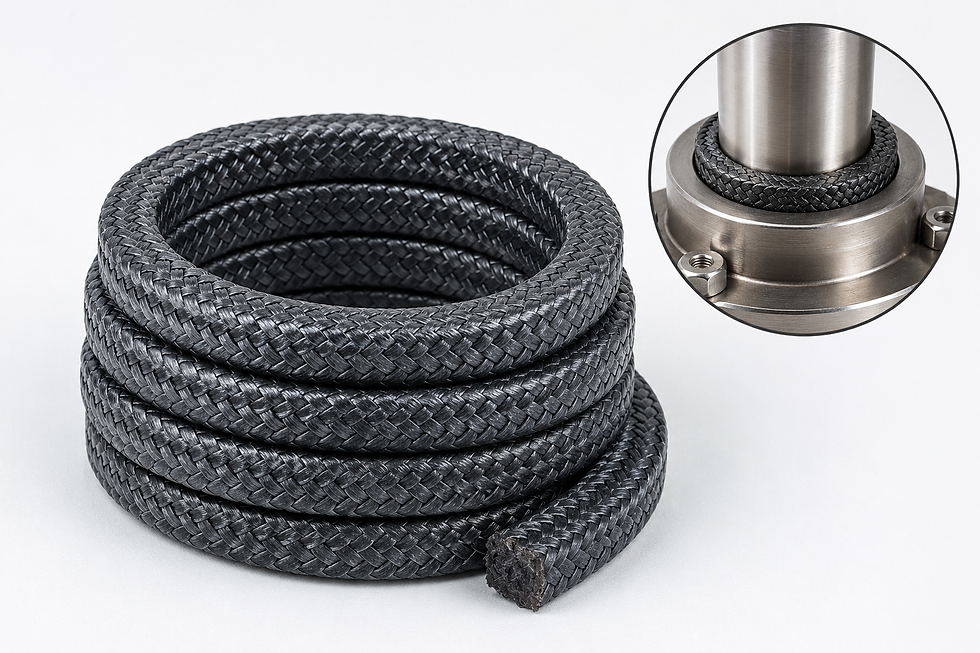
Gland packing, also known as compression packing, is a traditional sealing method made from braided materials such as graphite, PTFE, aramid fiber, or other synthetic fibers. The packing rings are compressed around the rotating shaft using a gland follower.
Unlike mechanical seals, gland packing requires a small amount of leakage for lubrication and cooling.
Key Features
Simple construction
Lower initial cost
Easy to install
Suitable for less demanding applications
Requires regular adjustment and replacement
Mechanical Seal vs Gland Packing Comparison
Advantages of Mechanical Seals
1. Excellent Leak Prevention
Mechanical seals provide a nearly leak-free operation, reducing product loss and improving workplace safety.
2. Lower Maintenance
Unlike gland packing, mechanical seals do not require frequent tightening or adjustments.
3. Energy Efficient
Lower friction between seal faces reduces power consumption and improves pump efficiency.
4. Longer Equipment Life
Reduced shaft wear helps extend the life of pumps and rotating equipment.
5. Suitable for Hazardous Fluids
Mechanical seals are ideal for chemicals, petroleum products, pharmaceuticals, and other hazardous liquids.
Advantages of Gland Packing
1. Lower Purchase Cost
Packing is inexpensive and easy to replace.
2. Easy Installation
No specialized tools are required for installation.
3. Works in Dirty Applications
Packing performs well where liquids contain solids or abrasives.
4. Readily Available
Packing materials are widely available in various sizes and materials.
Disadvantages of Mechanical Seals
Higher initial investment
Requires proper installation
Sensitive to dry running
Seal faces can be damaged if operated incorrectly
Disadvantages of Gland Packing
Continuous leakage is necessary
Frequent maintenance and adjustment
Increased shaft sleeve wear
Higher energy consumption
Shorter service life
Which One Should You Choose?
Choose a Mechanical Seal if you need:
Reliable leak-free performance
Low maintenance
Energy savings
Long service life
Handling of chemicals, oils, solvents, or hazardous fluids
High-speed or high-pressure applications
Choose Gland Packing if you need:
A low-cost sealing solution
Simple maintenance
Water pumps or less critical applications
Equipment operating at lower speeds and pressures
Industries Using Mechanical Seals
Mechanical seals are widely used in:
Chemical Processing
Oil & Gas
Pharmaceuticals
Food & Beverage
Water Treatment
Power Plants
Paper & Pulp
Mining
Marine Industry

Frequently Asked Questions (FAQs)
Is a mechanical seal better than gland packing?
Yes, for most industrial applications. Mechanical seals offer better sealing performance, lower maintenance, improved energy efficiency, and longer service life.
Why does gland packing leak?
A small amount of leakage is intentional. It lubricates and cools the packing to prevent overheating.
Are mechanical seals maintenance-free?
No. They require periodic inspection, but significantly less maintenance than gland packing.
Which is more economical in the long run?
Although mechanical seals have a higher upfront cost, they generally provide lower total ownership costs due to reduced maintenance, lower energy consumption, and longer service life.
Conclusion
Both mechanical seals and gland packing have their place in industrial applications. Gland packing remains a practical option for simple, low-cost systems, while mechanical seals provide superior sealing performance, improved reliability, and reduced maintenance for demanding applications.
For industries where efficiency, safety, and long-term reliability are essential, mechanical seals are the preferred choice.
Suggested Keywords
Mechanical Seal vs Gland Packing
Mechanical Seal
Gland Packing
Pump Shaft Seal
Mechanical Seal Benefits
Industrial Pump Seals
Pump Leakage Solutions
Compression Packing
Mechanical Seal Comparison
Industrial Sealing Solutions

Comments