
Mechanical Seals Types, Working Principle and Industrial Applications Guide
A small leak at a pump shaft can create a large maintenance problem. It can waste product, damage bearings, affect safety, and increase downtime. That is why mechanical seals are a critical part of pumps, agitators, mixers, reactors, and many other rotating machines used in process industries.
This guide explains the main mechanical seal types, how they work, where they are used, and what to check before selecting or replacing a seal. It is written for practical industrial use, especially for maintenance teams, pump manufacturers, OEMs, purchase managers, and distributors who need dependable sealing solutions without unnecessary technical complexity.

What is a mechanical seal?
A mechanical seal is a device used to control leakage between a rotating shaft and a stationary equipment housing. In pumps, it seals the gap where the shaft enters the pump casing. In agitators, mixers, and reactors, it helps contain liquids, gases, vapours, or slurry inside the equipment.
A typical seal has a few key parts:
Rotating face This part rotates with the shaft.
Stationary face This part remains fixed in the seal housing or gland.
Secondary seals O-rings, PTFE parts, gaskets, or wedges help seal non-moving joints.
Spring or multiple springs Springs keep the seal faces in contact during operation.
Metal hardware Retainers, sleeves, collars, and gland plates support the seal assembly.
The sealing action mainly happens between two flat seal faces. These faces are made from materials such as carbon, ceramic, silicon carbide, or tungsten carbide, depending on the liquid, equipment, and operating conditions.
Lova-Tech Industries, based in Kanodar, Gujarat, manufactures and supplies mechanical seal components and assemblies for industrial applications. The company was established in 2005 and is ISO 9001:2015 certified.
How the mechanical seal working principle functions
The mechanical seal working principle is based on two precision-lapped faces running against each other. One face rotates with the shaft while the other remains stationary. A thin fluid film forms between the faces during operation. This film helps reduce heat and friction while controlling leakage.
The spring system keeps the seal faces loaded. Process pressure may also help maintain contact between the faces. Secondary seals prevent leakage around the shaft sleeve, gland, and other non-rotating joints.
In simple terms, the seal controls leakage through three areas:
Between the rotating and stationary faces
Between seal parts and the shaft or sleeve
Between the seal gland and equipment casing
A correctly selected and installed seal allows equipment to run with controlled leakage suitable for the application. It is not correct to assume any mechanical seal can provide zero leakage under all conditions. Real performance depends on product properties, installation, equipment condition, operating practice, and seal design.
Common mechanical seal types used in industry
Different mechanical seal types are used based on equipment design, process media, maintenance requirements, and cost considerations. The main categories are explained below.
Single mechanical seals
A single mechanical seal uses one set of rotating and stationary faces. It is commonly used in clean fluids and general industrial pump applications.
Single seals are often preferred when:
The liquid is compatible with the seal materials
Leakage control requirements are moderate
The equipment has standard operating conditions
Simple installation and maintenance are preferred
They are common in water pumps, process pumps, transfer pumps, and many utility applications.
Double mechanical seals
A double mechanical seal uses two sets of seal faces. The space between the seals can be filled with a barrier or buffer fluid, depending on the system design.
Double seals are used where additional leakage control is required. They are common in applications involving hazardous, costly, toxic, abrasive, or crystallising liquids.
Typical uses include chemical processing, reactors, pharmaceutical equipment, and applications where product loss or atmospheric leakage must be reduced.
Balanced and unbalanced mechanical seals
Balanced seals are designed to reduce the hydraulic load acting on the seal faces. This can help reduce heat generation and face wear in suitable applications.
Unbalanced seals have a simpler design and are generally used in lower-demand applications where the process conditions allow it.
Selection between balanced and unbalanced designs should be based on equipment condition, process pressure, fluid behaviour, and manufacturer recommendations.
Pusher and non-pusher seals
In a pusher seal, the secondary seal moves along the shaft or sleeve as the seal faces wear. This design is widely used and suits many pump applications.
In a non-pusher seal, usually a metal bellows or elastomer bellows design provides flexibility without dynamic movement of an O-ring along the shaft. These seals can be useful in services where shaft fretting, sticking, or product build-up can affect operation.
Cartridge and component seals
A component seal is supplied as separate parts and assembled during installation. It can be cost-effective but requires proper fitting, measurement, and skill.
A cartridge seal comes pre-assembled on a sleeve with a gland plate. It reduces installation errors and is often preferred where faster maintenance and repeatable installation are required.

Industrial mechanical seal applications
Mechanical seal applications cover a wide range of rotating equipment. The right seal helps protect the process, reduce product loss, and support reliable equipment operation.
Mechanical seals for pumps
Pumps are the most common application. Mechanical seals for pumps are used in centrifugal pumps, transfer pumps, process pumps, water pumps, chemical pumps, and utility pumps.
Common pump services include:
Water transfer and circulation
Chemical transfer
Solvent handling
Effluent treatment
Cooling systems
Food and beverage process lines, where suitable materials are selected
General industrial process fluids
For pump applications, shaft condition, pump alignment, vibration, suction conditions, and dry running risk all affect seal performance.
Seals for agitators and mixers
Agitators and mixers often handle liquids with solids, varying viscosity, or batch process changes. Seal selection must consider shaft movement, vessel pressure, cleaning practices, and product compatibility.
Common applications include:
Chemical mixing tanks
Resin and adhesive processing
Paint and coating production
Food processing mixers
Pharmaceutical and cosmetic mixing vessels
Agitator seals may require special design attention because the shaft can experience more movement than a pump shaft.
Seals for reactors and process vessels
Reactors may involve heat, pressure, vapour, vacuum, or chemically active products. The seal arrangement must match the equipment and process duty. Double seals or special sealing systems may be used when product containment is critical.
Suitable materials and correct installation are especially important in reactor applications because maintenance access may be limited and downtime can be costly.
Key factors for selecting the right mechanical seal
Selecting a seal only by shaft size is not enough. A correct recommendation needs a clear understanding of the equipment and process.
The following factors should be reviewed before selecting replacement mechanical seals or a new seal design:
Selection factor | Why it matters |
Equipment type | Pump, agitator, mixer, or reactor design affects seal arrangement. |
Shaft size and sleeve details | Correct dimensions are required for fitment. |
Fluid or media | Chemical nature, abrasiveness, viscosity, and solids content affect material choice. |
Operating conditions | Temperature, pressure, and speed should be checked without assuming standard suitability. |
Seal face materials | Carbon, ceramic, silicon carbide, and tungsten carbide suit different services. |
Elastomer materials | O-rings and secondary seals must be compatible with the fluid. |
Installation space | Equipment design may limit seal type or gland arrangement. |
Maintenance preference | Cartridge seals may reduce installation errors in some plants. |
A practical way to start is to collect the old seal sample, pump model if available, shaft details, and media information. This helps the manufacturer or supplier identify a suitable replacement or custom option.
Advantages and limitations of mechanical seals
Mechanical seals offer several practical benefits in industrial equipment, but they also have limits.
Advantages
Better leakage control compared with many traditional packing arrangements
Reduced shaft or sleeve wear when properly selected and installed
Suitable for a wide range of liquids and equipment types
Available in standard and custom designs
Can support cleaner working areas by reducing visible leakage
Useful for OEM pump builds and plant maintenance replacements
Limitations
Sensitive to dry running, poor installation, vibration, and misalignment
Requires correct material selection for the process media
Seal faces can fail if solids, crystallisation, or heat are not managed
Some applications may need flushing, cooling, or barrier systems
Incorrect storage or handling can damage lapped seal faces
A seal should be treated as a precision component, not a simple hardware item. Careful handling and installation often make a major difference in service life.

Maintenance tips for better seal performance
Good maintenance practice reduces repeated failures. When a seal fails, replacing only the seal without checking the equipment can lead to another failure.
Use these checks during maintenance:
Inspect the shaft or sleeve for scoring, corrosion, or wear.
Check pump bearings, coupling alignment, and vibration.
Avoid running the pump dry.
Confirm correct direction of rotation where relevant.
Clean seal chambers and remove old gasket material.
Handle seal faces carefully and avoid touching lapped surfaces with dirty hands.
Lubricate elastomers only with a suitable lubricant recommended for the material and service.
Tighten gland bolts evenly to avoid distortion.
Review suction conditions to reduce cavitation and air entry.
Record failure signs such as cracked faces, worn O-rings, heat marks, or corrosion.
If the same seal fails repeatedly, check the full system. The cause may be process-related rather than a seal manufacturing issue.
When custom mechanical seals are useful
Standard seals suit many applications, but custom mechanical seals are useful when equipment is old, imported, modified, or not supported by easy spare availability.
Custom design may be considered for:
Non-standard shaft sizes
Special gland or housing dimensions
Obsolete pump models
Agitator or mixer applications
Special face material combinations
Replacement of imported seal samples
OEM development requirements
Lova-Tech Industries manufactures and supplies industrial mechanical seals, seal faces, O-rings, springs, graphite products, and PTFE components for varied industrial needs. For product suitability, the application details should be reviewed before final selection.
Working with a mechanical seal manufacturer in India
For Indian and international buyers, working with a mechanical seal manufacturer in India can help simplify replacement, sampling, and custom development when clear technical details are shared.
Useful information to provide includes:
Equipment type and make, if known
Existing seal sample or photographs
Shaft diameter and seal chamber dimensions
Fluid name and basic properties
Operating temperature and pressure, if available
Application details such as pump, mixer, agitator, or reactor
Quantity requirement and whether it is for maintenance or OEM use
This information helps avoid mismatch and reduces back-and-forth during procurement.
For mechanical seal requirements, replacement seals, or custom solutions, contact Lova-Tech Industries through the product enquiry page: connect with Lova-Tech Industries for mechanical seal solutions.

Frequently asked questions
What is the main function of a mechanical seal?
A mechanical seal controls leakage where a rotating shaft passes through a stationary casing. It is commonly used in pumps, agitators, mixers, and reactors to help contain process fluids.
Which seal face material is best?
There is no single best material for every application. Carbon, ceramic, silicon carbide, and tungsten carbide each suit different duties. The correct choice depends on the fluid, solids content, temperature, pressure, and equipment condition.
Can a mechanical seal be repaired?
Some seal assemblies can be repaired by replacing faces, O-rings, springs, or other components. Repair suitability depends on the seal condition, design, and cost compared with replacement.
Why do mechanical seals fail early?
Common reasons include dry running, wrong material selection, poor installation, shaft misalignment, vibration, damaged bearings, abrasive particles, or unsuitable operating conditions.
What details are needed for a replacement mechanical seal?
Useful details include the old seal sample, shaft size, equipment type, fluid handled, operating conditions, and photographs or drawings if available. These details help identify a compatible replacement.
Suggested SEO details
SEO title
Mechanical Seals Types, Working Principle and Industrial Applications Guide
Meta description
Learn about mechanical seal types, working principle, industrial applications, selection factors, advantages, limitations, and maintenance tips for pumps, agitators, mixers, and reactors.
URL slug
mechanical-seals-types-working-principle-applications
Primary focus keyword
mechanical seals
Recommended image plan for the post
The four images included in this guide are suitable for a B2B industrial manufacturer website:
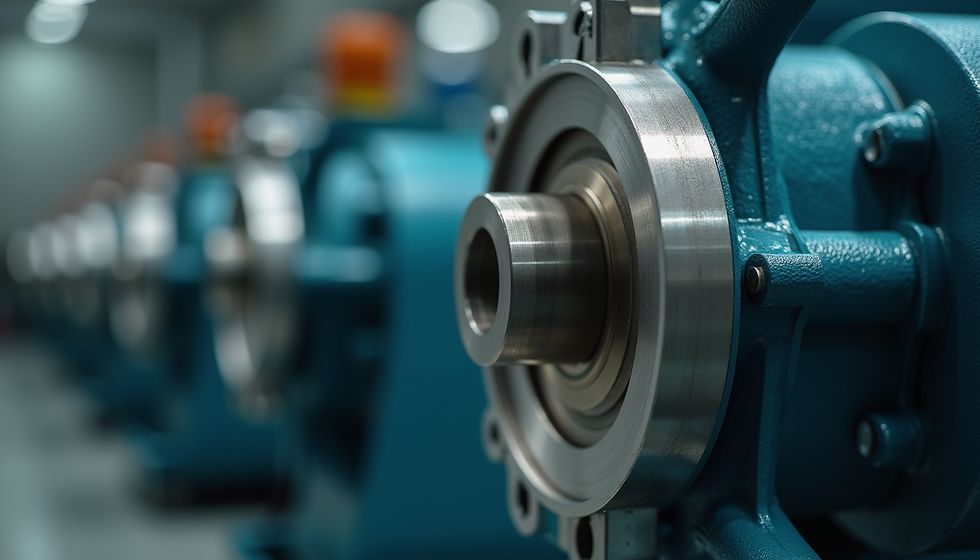
Close-up product image of a mechanical seal assembly
Comparison image of different seal types
Industrial pump maintenance image showing the seal area
Component image showing seal faces, O-rings, springs, graphite, and PTFE parts
Each image should use clear industrial photography, accurate components, and descriptive alt text to support both user understanding and search visibility.
Final takeaway
A mechanical seal is a small but important part of rotating equipment. Correct selection depends on the equipment, fluid, seal face materials, elastomers, installation practice, and operating conditions. For pumps, agitators, mixers, reactors, and OEM applications, the right seal can support safer operation, better leakage control, and more planned maintenance.
Lova-Tech Industries manufactures and supplies mechanical seals, replacement seals, custom seals, seal faces, O-rings, springs, graphite products, and PTFE components from Kanodar, Gujarat, India. Share your application details or old seal sample to discuss a suitable sealing solution for your requirement.


Comments